
How to Walk Correctly After 50: A Step-by-Step Guide to Better Walking Habits

How to Walk Correctly After 50: A Step-by-Step Guide to Better Walking Habits
How to Walk Correctly After 50: A Step-by-Step Guide to Better Walking Habits
If your feet are sore after daily walks, your neck is uncomfortable, or your body is too tired to go on regularly, the answer is not necessarily to walk farther. Maybe it’s time to switch up your walk.
Begin slowly; walk slowly for the first 3 to 5 minutes. Wear shoes that fit well and have cushioning. Keep head upright; let arms swing naturally. Rather than compensating for inactivity with a single long outing, develop a regular routine.
Here’s how to blend those habits, avoid common walking mistakes after 50, and create a routine that you can stick to without discomfort.
Medical Note: This information is educational and does not substitute for individual medical advice. If you have a medical condition, persistent pain, or concerns about exercise, talk to your doctor about how to modify your walking routine.
Key Takeaways
- Begin with manageable sessions and build toward about 30 minutes of walking on at least five days each week.
- Start each walk with 3 to 5 easy minutes, then gradually increase your pace.
- Wear well-fitting cushioned shoes, keep your head upright, and let your arms move naturally.
- Put your phone away and include hydration and appropriate post-walk recovery.
Table of Contents
- Step 1: Set a Walking Goal That Matches Your Current Ability
- Step 2: Check Your Shoes Before Increasing Your Distance
- Step 3: Put Your Phone Away and Prepare to Pay Attention
- Step 4: Begin Every Walk With 3 to 5 Easy Minutes
- Step 5: Align Your Head and Trunk Without Becoming Rigid
- Step 6: Let Your Arms Move Naturally With Your Steps
- Step 7: Build Duration Gradually Instead of Chasing More Minutes
- Step 8: Include Recovery in the Session
- Step 9: Review Problems Before Adding More Walking
Step 1: Set a Walking Goal That Matches Your Current Ability
The first decision is not about walking speed. It's about how much walking you can do regularly without making the next session harder.
A good goal is to walk at least 30 minutes on at least five days per week. But that is a goal to work toward, not something that you have to do on your first day. Someone returning to activity might need a much smaller starting point.
If you aren’t used to walking regularly, start with around 10 to 20-minute periods, if that’s manageable. I recommend starting 3 days a week to build the habit, then increasing the frequency and duration.
Why walking habits deserve attention after 50
Age-related changes can affect how you feel when you walk and how much activity you can tolerate. They do not hit you suddenly on your fiftieth birthday, and they do not hit everyone in the same way. But certain areas become more and more relevant:
- Muscle health: Age-related loss of muscle mass and function, often referred to as sarcopenia, can affect strength and everyday mobility. Muscles also play an important role in using glucose.
- Joint mobility: Stiffness can make the beginning of a walk uncomfortable. Joint movement helps distribute synovial fluid, which lubricates joints and contributes to cartilage nutrition.
- Energy use: Changes in muscle mass and activity can affect how much energy the body uses. Continuing the same eating habits while becoming less active may contribute to weight gain.
- Circulation: Arterial stiffness and vascular disease can affect exercise tolerance and deserve medical attention when symptoms develop.
Walking can support health in these areas, but it should not be presented as a guarantee against diabetes, arthritis, or cardiovascular disease. Nor should every ache or cramp be attributed to aging.

Plan repeatable sessions, not occasional endurance tests
A common pattern is to do very little during the working week and then walk for 90 minutes or two hours on the weekend. If you’re not used to that amount, it’s a sudden increase in workload.
“Rather, pick a timetable that fits your real week. A beginner, for instance, might plan three short walks on three different days. Once those sessions seem manageable, the next goal could be greater regularity, followed by gradually longer walks.
The practical question is: Can you repeat this routine? A modest walk that becomes a habit is more useful than an ambitious first outing that leads you to stop exercising.
Step 2: Check Your Shoes Before Increasing Your Distance
We’re used to walking, and shoes are easily overlooked. But the shoes you wear on a casual errand may not be comfortable enough for a routine exercise walk.
As you get older, the cushioning under your feet can change. Some people also have changes in their foot shape and arch support. These factors make fit and cushioning worth investigating before you blame all foot discomfort on the walking itself.
Look for fit, cushioning, and support
"With a good walking shoe, you want it to be snug but not too tight or loose that you would get blisters. Especially focus on cushioning under the heel and under the front of the foot where pressure is repeatedly applied while walking.
Use this simple checklist:
- Fit: Does the shoe feel secure and comfortable while you move?
- Heel cushioning: Does the heel feel adequately cushioned rather than hard against the ground?
- Forefoot comfort: Is the area beneath the front of the foot comfortable during repeated steps?
- Support: Does the shoe accommodate your foot comfortably, including your arch?
- Condition: Has the interior cushioning become noticeably flattened or less comfortable?
Do not judge shoes only by their appearance. An upper that remains intact does not tell you whether the cushioning inside still performs as it did when new.
Understand why changes in your arch matter
A lower arch or an acquired flat foot can change how a shoe feels. If footwear that once suited you becomes uncomfortable, it is worth reassessing the fit rather than simply buying the same size and model again.
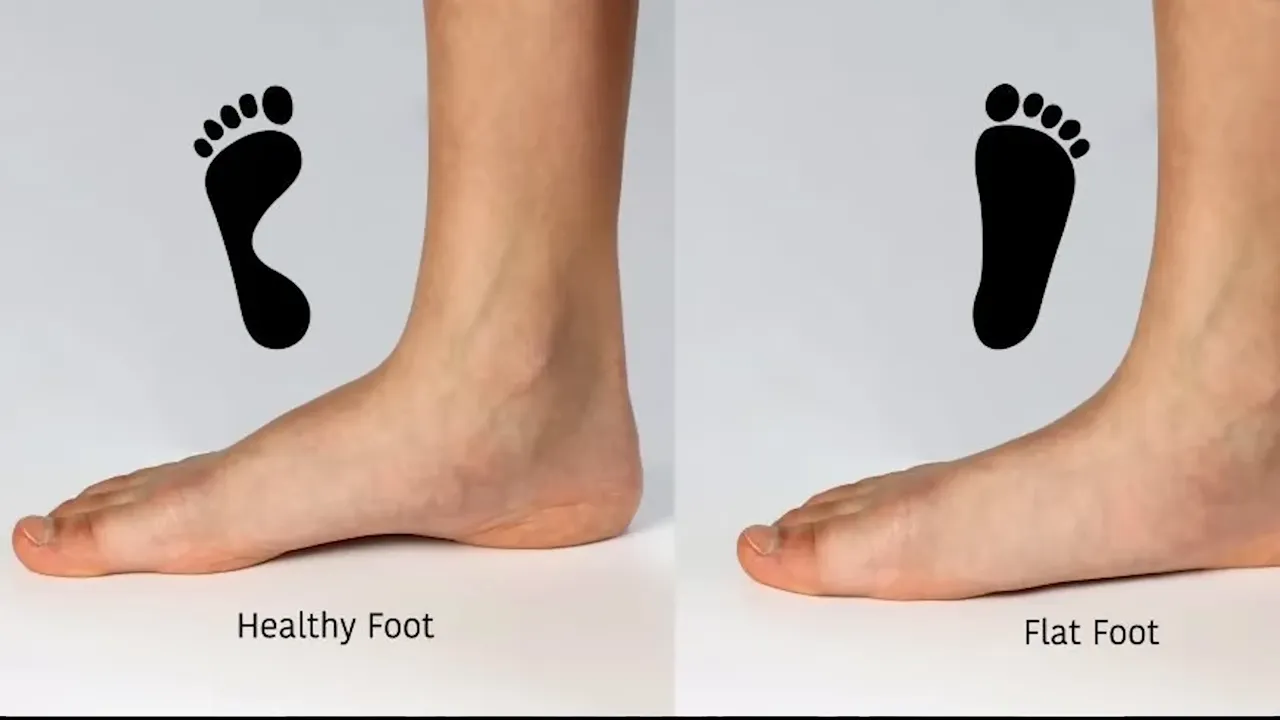
This comparison illustrates differences in arch shape. It is not a way to diagnose the cause of foot pain or decide which treatment you need.
Review older shoes even when they are not torn
If you walk most days, plan a thoughtful review of your footwear into your routine. An annual review is a good reminder, but replacement needs are about use and condition, not the calendar.
The big mistake is waiting until it’s obvious there is external damage to think if a shoe is worn out or not.
For a routine walk after 50, well-fitting, cushioned shoes are a better starting choice than assuming that everyone suits barefoot walking. Even if you've recently changed shoes, you should still get persistent foot pain checked out.
Step 3: Put Your Phone Away and Prepare to Pay Attention
Before taking your first steps, decide where your phone will stay. Keeping it in a pocket rather than in your hand removes a common source of distraction.
Reading messages while walking affects two parts of the technique at once. It encourages the head to bend forward, and it draws attention away from the route.
Keep your eyes open for the surroundings
Walking depends partly on visual information about the ground, obstacles, and nearby movement. Your body's sense of position also contributes to balance. Concentrating on a small screen interferes with the attention you can give to your surroundings.
This does not mean staring rigidly at one distant point. Look ahead while continuing to scan the path as needed. Good posture and awareness should work together.
If you need to read a message or operate your phone, stop in a suitable place first. Then put it away before continuing.
Do not replace one distraction with another
Audio can keep the phone in a pocket, but awareness is still the main priority. Any use of earbuds should leave you able to pay attention to the environment.
The purpose of this step is simple: keep your head free to stay upright, your hands available for normal movement, and your attention on walking.
Before leaving, check three things: your shoes feel comfortable, your phone is stored, and your planned duration matches what you can reasonably manage today.

Step 4: Begin Every Walk With 3 to 5 Easy Minutes
Starting too quickly is one of the most avoidable walking mistakes. Enthusiasm can make a new routine feel like a test: begin fast, cover more ground, and prove that the session counts.
A better approach is to treat the beginning as a warm-up. Spend the first 3 to 5 minutes walking slowly, then gradually move toward your usual exercise pace.
Why a gradual start matters
The warm-up creates a transition from relative inactivity to sustained movement. It gives you an opportunity to notice stiffness, settle into your stride, and assess how your body feels before asking more of it.
Muscles and joints do not face the same demands in the first step as they do after several minutes of movement. A gradual start also avoids making the session's start unnecessarily abrupt for your cardiovascular system.
This is particularly relevant if you have blood pressure concerns or another medical condition. Your doctor may recommend an individualized approach to exercise intensity.
How to warm up without complicating the routine
- Start at an easy pace. Do not try to match another person's speed immediately.
- Let movement settle. Notice your feet, knees, posture, and breathing.
- Increase gradually. Move toward your planned pace only when you feel comfortable.
- Reconsider discomfort. Do not use faster walking to push past pain.
The warm-up is part of the walk, not an optional activity that only athletes need. A shorter session still deserves an easy beginning.
It is also important not to overinterpret soreness. Muscle discomfort after activity is not, by itself, a diagnosis of chronic fatigue syndrome or proof of a particular type of injury. Persistent symptoms need an appropriate assessment.
Step 5: Align Your Head and Trunk Without Becoming Rigid
Once you are moving comfortably, check your posture. Many people walk with their heads pushed forward and their eyes fixed on the ground just in front of their shoes.
Concern about stumbling can contribute to this habit. So can a phone be held at chest or waist height. The intention may be sensible, but maintaining a bent-forward position throughout the walk is not the answer.
Use a simple upright-position cue
Imagine a gentle upward lift through the top of your head. Keep your chin approximately parallel to the ground and direct your gaze ahead.
The goal is a comfortable upright position, not a military stance. Do not force your chest upward or hold your neck stiffly in an effort to look correct.
A brief posture check can include:
- Head: Upright rather than continually reaching forward.
- Chin: Approximately level rather than tucked toward the chest.
- Eyes: Looking ahead while scanning for obstacles.
- Trunk: Upright without an exaggerated bend or forced arch.
Why head position affects comfort
Holding the head forward changes the demands placed on the neck and back. Over a repeated walking routine, this position can become a source of unnecessary discomfort.
A slumped position can also make breathing feel less comfortable by limiting the space available for normal movement of the chest and diaphragm. The practical response is not a complicated breathing exercise. It is to avoid spending the entire walk folded forward.
Look ahead, but still check the ground
Advice to keep your gaze forward should never be interpreted as an instruction to ignore uneven surfaces. You still need to notice what is underfoot.
For example, glance at an obstacle, adjust your route, and return to looking ahead. That is different from walking continuously with your chin down.
If an upright position is painful or difficult to maintain, do not force it. Seek guidance about the limitation rather than assuming determination alone will correct it.

Step 6: Let Your Arms Move Naturally With Your Steps
Walking is not only a leg activity. Arm movement is part of the normal coordinated pattern of walking, yet many people restrict it by keeping both hands in their pockets or carrying a phone throughout the session.
Once your head and trunk feel comfortable, check whether your arms are free to move.
Follow the opposite arm and leg pattern
As one leg moves forward, the opposite arm typically moves forward as well. This alternating pattern should feel natural rather than rehearsed.
Allow your arms to swing with your steps. You may find a comfortable bend at the elbows useful, sometimes around a right angle, during a purposeful exercise walk. However, an exact angle is not a requirement, and your arms should not feel locked in place.
Coordination matters more than exaggeration. There is no need to turn an ordinary walk into forceful arm pumping.
Remove avoidable restrictions
Hands in pockets and objects held continuously can interfere with comfortable movement. Storing the phone is an easy correction because it also supports better head position and attention.
Try a short technique check during the walk:
- Notice whether your hands are in your pockets.
- Release any unnecessary tension in the arms.
- Let the arms alternate naturally with your legs.
- Continue without trying to control every swing.
This advice concerns unnecessary restrictions, not prescribed walking aids. If you use a cane or another aid, follow the technique recommended for you rather than giving it up to create a symmetrical arm swing.
Similarly, a limitation affecting one shoulder or arm may require an adapted approach. Walking technique should accommodate your needs, not become another reason to exercise through pain.
Step 7: Build Duration Gradually Instead of Chasing More Minutes
Once the basic technique is in place, the next task is progression. This is where many routines become inconsistent. A comfortable week is followed by a sudden increase, then discomfort and several missed sessions.
Use gradual progression instead. The aim is to make regular walking sustainable, not to make every outing longer than the last.
Move from a starting routine toward a regular target
A practical sequence is:
- Establish a manageable starting session. Around 10 to 20 minutes may be suitable for a beginner who tolerates that amount.
- Repeat it regularly. Three days each week can be a starting point.
- Increase as comfort allows. Work toward approximately 30 minutes on at least five days each week.
- Keep longer sessions optional. Some people may comfortably walk for 30 to 45 minutes, but longer is not automatically better.
These are practical reference points rather than a personalized exercise prescription. Your medical condition, current fitness, and symptoms may call for a different plan.
Do not make up missed sessions with a sudden long walk
Consider someone who planned several short walks but missed most of them because of work. A two-hour weekend outing may seem like a convenient way to make up for lost time.
That approach changes the workload considerably. Instead of resuming a familiar session, the person attempts a much longer one without having established regular tolerance.
A more sensible response is to restart the manageable routine. Treat a missed walk as a scheduling issue, not a debt that must be repaid through extra exertion.
Choose pace individually
There is no single walking speed that suits everyone over 50. Begin slowly, then move at a pace appropriate to your ability and any medical guidance you have received.
Trying to keep up with a faster companion can undo the benefits of a gradual start. So can increasing speed while your posture becomes progressively more strained.
When choosing between a shorter walk with a comfortable technique and a longer walk that leaves you struggling, use the manageable option as your foundation.
Step 8: Include Recovery in the Session
A walking routine is easier to maintain when it includes time after the main activity. Finishing the planned distance does not mean you need to rush into the next task immediately.
Two straightforward recovery habits are paying attention to fluid replacement and allowing time for gentle stretching.
Drink water appropriately
Walking can involve fluid loss, particularly in warm conditions or when you sweat. Have water available afterward and drink as needed.
A glass of water can be a simple post-walk habit, but it is not a universal prescription. Fluid needs vary, and anyone who has been given a fluid restriction should follow their clinician's advice.
The useful principle is to remember hydration rather than applying the same amount to every person and every walk.
Allow 5 to 10 minutes for gentle stretching
If suitable for you, set aside approximately 5 to 10 minutes for gentle post-walk stretching. This creates a clear recovery period rather than ending the session in a hurry.
Keep the distinction between stretching and forcing movement clear. Stretching should not become an attempt to overcome sharp pain or push an uncomfortable joint farther than it tolerates.
If you are unsure which stretches are appropriate, ask a clinician or physiotherapist for guidance. This is especially useful when pain or restricted mobility already affects your walking.
Judge recovery by whether the routine remains manageable
The purpose of recovery is not to add another demanding workout. It is to complete the session thoughtfully and notice how you feel afterward.
If every walk leaves you too uncomfortable to repeat the routine, review the duration, starting pace, shoes, and technique. Do not assume that soreness proves the session was effective.
A successful routine should support continued activity. Repeatedly having to abandon it due to discomfort is a reason to reassess the plan.
Step 9: Review Problems Before Adding More Walking
If you are walking regularly but feel that it is not helping, first clarify the problem. Foot pain, neck discomfort, inconsistent attendance, and disappointment about body weight are different concerns. They do not all require the same correction.
If your feet hurt
Review shoe fit and cushioning, including the condition of the interior. Consider whether you recently increased your walking time or returned suddenly after a long period of inactivity.
Those checks can identify practical issues, but they do not establish a diagnosis. Persistent foot pain deserves medical advice rather than repeated experiments with longer walks.
If your neck or back feels strained
Check whether you are looking down continuously, leaning forward, or holding a phone. Return to a comfortable upright position and keep your gaze available for the route ahead.
If discomfort continues despite those adjustments, seek an assessment. Posture is one consideration, not an explanation for every symptom.
If you keep stopping the routine
Look at how demanding the plan is. Beginning with long sessions, walking only when time permits, and trying to compensate on weekends can make consistency difficult.
Reduce the plan to an amount you can repeat. Then build from that starting point rather than restarting with the same excessive target.
If the scale has not changed
Weight is not the only reason to walk, and walking does not guarantee weight loss. The relationship between food intake, activity, and energy use still matters.
Do not respond to an unchanged scale by automatically doubling your walking time. Review the overall routine and discuss your goals with a healthcare professional when needed.
Keep the benefits realistic
Regular walking can contribute to blood sugar management, blood pressure management, cardiovascular health, sleep, and emotional well-being. It is a supportive habit, not a replacement for prescribed treatment or a promise that the disease will never develop.
Likewise, cramps, cold feet, or leg fatigue should not automatically be dismissed as normal aging or assumed to have a circulatory cause.
If walking brings on chest pain, faintness, or severe or unusual breathlessness, stop and seek urgent medical help. Persistent or worsening pain also needs assessment rather than being treated solely as a technique problem.
Use a final routine checklist
- Before: Choose a manageable duration, check your shoes, and store your phone.
- At the start: Walk slowly for 3 to 5 minutes.
- During: Stay comfortably upright, look ahead, and allow natural arm movement.
- After: Address hydration, allow appropriate recovery, and note any symptoms.
- Across the week: Favor regular sessions over sudden increases.
The next step is not necessarily a longer walk. It is a better-organized one. Begin with an amount you tolerate, correct the avoidable mistakes, and make regularity the foundation of your walking routine after 50.
Step 10: Check Common Questions About Walking After 50
How long should someone over 50 walk each day?
A practical target is approximately 30 minutes on at least five days each week. Beginners may need to start with 10 to 20 minutes on three days weekly and increase gradually. Your starting point should reflect your ability and medical needs.
Should I walk fast from the beginning?
No. Spend the first 3 to 5 minutes walking slowly, then gradually increase toward an appropriate pace. The beginning of the session should be a warm-up rather than an immediate effort to walk as fast as possible.
What should I do with my arms while walking?
Allow them to swing naturally, with the opposite arm moving forward as each leg advances. Avoid keeping both hands in your pockets or unnecessarily holding a phone. A comfortable elbow bend is useful, but an exact angle is not essential.
Can I replace weekday walks with one long weekend walk?
For someone building a routine, regular manageable sessions avoid the sudden workload of an unusually long outing. If you miss planned walks, resume your normal, manageable session rather than trying to make up all the missed time at once.
How often should walking shoes be replaced?
Review them regularly, including their fit and internal cushioning. An annual review is a useful reminder for frequent walkers, but replacement depends on use and condition. Do not wait for the outside to tear before checking whether the shoes still feel supportive.
What if walking keeps causing pain?
Reconsider your starting pace, session length, footwear, and posture, but do not assume technique explains every symptom. Seek medical advice for persistent or worsening pain instead of repeatedly pushing through it.

.png&description=How to Walk Correctly After 50: A Step-by-Step Guide to Better Walking Habits)